Immigration · Report · File No. 261118-420
Lawsuit challenges HUD rule that could force U.S. citizens to split from parents
Three Los Angeles County residents and two tenant groups sued HUD over a rule that could make mixed-status families choose between housing aid and living together. It is set to take effect Dec. 14.
Every quote in this story (2) was matched word for word against its source. How we work
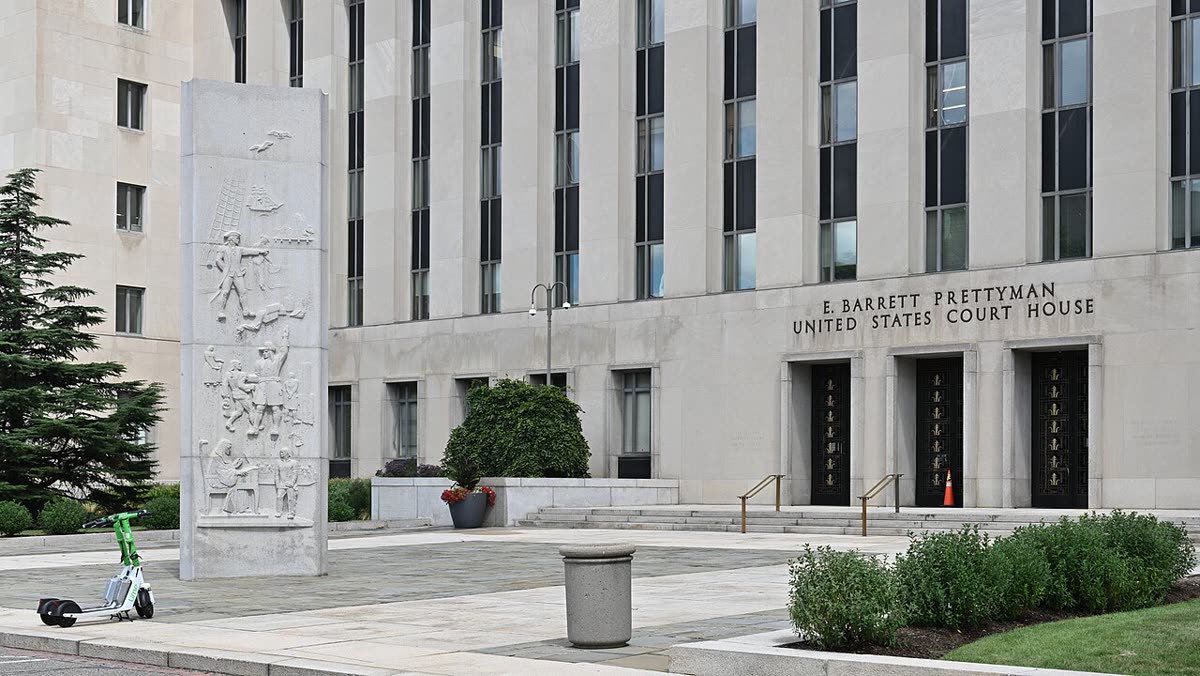
The Trump administration is being sued over a new federal housing rule. The suit says the rule could force some U.S. citizens to choose between losing housing help and living apart from relatives who are not eligible for the aid 1.
The Department of Housing and Urban Development (HUD) published the rule on Nov. 12. It is scheduled to take effect Dec. 14 1. The lawsuit was filed Monday in the U.S. District Court for the Central District of California against HUD and Secretary Scott Turner 1.
What the rule changes
For decades, "mixed-status" families have been allowed to live together in federally assisted housing. Those are families where some members are eligible for aid and others are not. Assistance was based only on the members who qualify 1.
HUD also let other household members decline to claim an eligible immigration status, under a provision called "do not contend." The new rule eliminates that option and expands verification requirements 1.
 From Channel GOPSchumer says Trump settled his own lawsuit for $2 billionChuck Schumer · 1.5K plays · captioned, with the source named
Plaintiffs say this will effectively end reduced, prorated aid for many mixed-status households 1. Families that keep an ineligible member in the home could also lose assistance for at least two years. Housing authorities and certain property owners would have to report people they determine are in the country unlawfully to the Department of Homeland Security 1.
Who is suing
The plaintiffs are three Los Angeles County residents and two tenant groups, People Organized for Westside Renewal and Union de Vecinos. They are represented by Public Counsel, Kendall Brill & Kelly LLP and Bird Marella LLP 1.
One plaintiff, identified as M.R., is a U.S. citizen with cerebral palsy who has lived in public housing since age 1. His parents and his sister, who has DACA status, cannot establish HUD-eligible status, the complaint says. The family could lose its home, or M.R. could be separated from relatives who help care for him 1.
A second plaintiff, J.L., lives with a mother, stepfather and two brothers. J.L. and the brothers are citizens, and the parents are not HUD-eligible. The family has lived in public housing for about 15 years 1.
No family should have to choose between staying together and keeping a roof over their heads.
The numbers
About 79,300 people live in mixed-status households that get HUD aid. Roughly 36,000 of them are eligible children, according to HUD figures cited in the suit 1. HUD estimated that keeping the same level of aid under the rule would cost an extra $311 million to $385 million, according to court filings 1.
Los Angeles County is short about 486,000 affordable homes for lower-income renters. It has about 73,040 homeless people, the complaint says. A two-bedroom apartment has a fair market rent of $2,964 a month 1.
The administration's argument
Turner defended the rule by saying mixed-status families are "pushing aside hardworking U.S. citizens" for housing 2. Newsweek said it had contacted HUD for comment 1.
The suit argues HUD exceeded its authority and violated federal housing law and the Constitution. It says Congress meant to let eligible family members get reduced aid, and that HUD did not weigh the risks of displacement and homelessness 1. The plaintiffs want the judge to postpone the Dec. 14 date and block enforcement while the case continues. They also want the rule declared unlawful and set aside 1.
That matters because it is one of several administration moves to tighten immigrants' access to public benefits. The public charge rule, for example, lets immigration officers weigh Medicaid, food stamps and housing aid when reviewing some green card applications 1. The next step is a ruling on whether to delay the rule before Dec. 14.
The Record
- HUD published a rule changing how citizenship and immigration status are verified in federally assisted housing 1.
- Three Los Angeles County residents and two tenant groups sued HUD and Secretary Scott Turner in federal court in the Central District of California 1.
- The rule is scheduled to take effect; plaintiffs ask a judge to postpone it 1.
Republish this story on your site or in your newsletter
Any site, blog or newsletter may run this story free of charge. Keep the credit line and its link to the original, do not sell it, and edit only for length or house style (the full terms). Photos carry their own licenses, noted under each photo on this page, so use the text alone unless a credit says otherwise.
Paste it into your editor's HTML view. The one-pixel image at the end tells our newsroom the story ran; it stores no reader data.
Sources
- Newsweek, “Trump Sued Over Rule That Could Separate US Citizens From Parents” (2026-11-18). newsweek.com/trump-sued-over-rule-that-could-separate-us-cit
- The Intercept, “HUD, Trump, housing, immigration, family separation” (2026-11-12). theintercept.com/2026/11/12/hud-trump-housing-immigration-fa
Found an error? Tell the newsroom. Corrections are noted at the top of the story.
More from the files
HUD rule ends 1995 policy letting mixed-status families share public housing
A new federal rule requires proof of citizenship or eligible immigration status in HUD-funded housing. A research group says it could push about 80,000 people out of their homes, many of them U.S.-citizen children.

U.S. citizen shot by ICE agent sues for $25 million, alleging excessive force
Carlos Jimenez says an immigration officer shot him in the back and that federal agents then used fabricated evidence to prosecute him. The government denies wrongdoing in his account of the shooting, and a judge made no finding of excessive force.

Trump administration asks Supreme Court a third time to end Venezuelan protected status
The Justice Department says a lower court could restore deportation protection for hundreds of thousands of Venezuelans within days. The Supreme Court has already sided with the administration twice on its emergency docket.
Delivered free to your door*
The Morning Edition
One short email at 7 a.m. Eastern: the day's top files, one clip worth your time, and the race to watch. Plain English, large type, no clutter.
*Your inbox. Free. Unsubscribe with one click, any time.