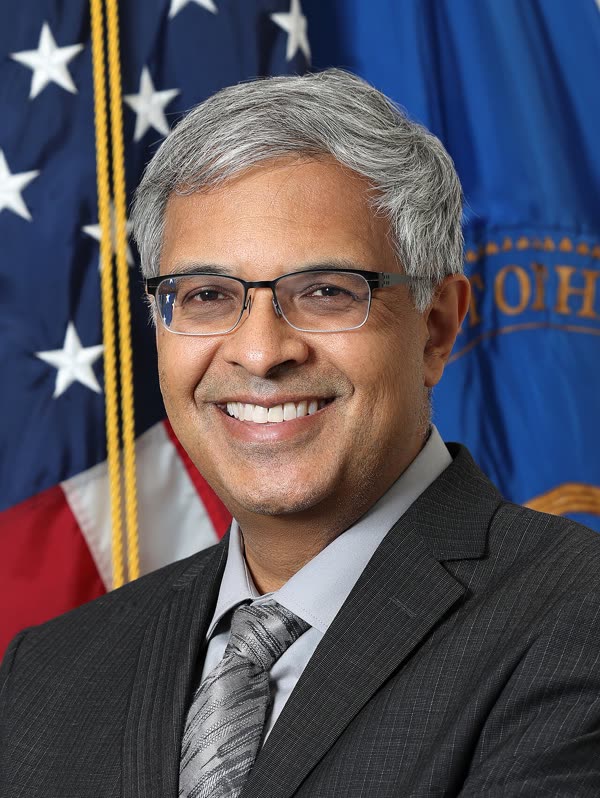
The Stanford health economist who opposed COVID-19 lockdowns now directs the nation's medical research agency, and for six months in 2026 he ran the CDC at the same time.
Biography
Jay Bhattacharya was born in Kolkata, India, in 1968 and later became a U.S. citizen. 1 He earned four degrees at Stanford: bachelor's and master's degrees in economics in 1990, a medical degree in 1997 and a doctorate in economics in 2000. 1 He worked as an economist at the RAND Corporation from 1998 to 2001 and then spent more than two decades on the Stanford faculty, studying health economics and health policy. 12 A former NIH division director told NBC News he never completed clinical training after medical school and has not practiced medicine. 2
He became widely known in 2020 as one of three lead authors of the Great Barrington Declaration, an open letter that urged officials to lift COVID-19 lockdowns and let the virus spread among young, healthy people while shielding the old and sick. 2 Colleagues accused him of misrepresenting findings, including on masks, and he became a persistent critic of federal health agencies. 23 At his confirmation hearing he said he would encourage scientific dissent at the agency. 2
The Senate confirmed him 53-47 on March 25, 2025, and he took office on April 1. 1 He leads an agency with a budget of nearly $50 billion and 27 research institutes. 2 Under him the agency has seen large job cuts and reduced funding for research on vaccines, climate change and diversity, and in June 2025 more than 300 NIH researchers signed a protest letter called the Bethesda Declaration. 3
On February 18, 2026, he was also made acting director of the Centers for Disease Control and Prevention after Deputy Health Secretary Jim O'Neill left that role. 31 He held both jobs until Erica Schwartz took over the CDC in August 2026. 14 Wikipedia listed him as the sitting NIH director as of its November 8, 2026 edit. 1
In the job
The acts and events that have defined the post so far, oldest first.
Took office as the 18th director of the National Institutes of Health. 1
The agency ended the practice of U.S. grant holders passing NIH money to foreign partners; foreign researchers must now hold direct awards. 1
Introduced and promoted a health department report on gender dysphoria in young people that favored therapy over medical treatment; medical groups said it contradicted mainstream practice, according to Wikipedia's summary of ABC News and Guardian coverage. 1
More than 300 NIH researchers signed the Bethesda Declaration criticizing him and the administration over cuts and changes to research policy. 3
Took part with Mehmet Oz and Marty Makary in the review behind the administration's statements on acetaminophen, leucovorin and autism. 5
Named acting CDC director in addition to his NIH job, the third person to lead the CDC in under a year. 31
His acting CDC role ended as Senate-confirmed director Erica Schwartz took over. 14
Disputes, and their side
What critics, courts or investigators have said, and the answer given. An allegation is not a finding.
In the Bethesda Declaration, more than 300 agency researchers said the administration and Bhattacharya were undermining the agency's mission through grant cuts and policy changes. 3
Their side: No public response found in the sources reviewed.
Nature reported that the agency would give lower priority to pandemic preparedness and biodefense research; infectious disease experts said they were dismayed. 3
Their side: The agency described the change as a shift toward diseases now affecting people in the United States. 3
Before his confirmation, scientists including Georgetown's Lawrence Gostin said his public health statements during the pandemic had been misleading and deserved questioning. 2
Their side: In prepared remarks he said he would foster a culture that welcomes dissent and different scientific views. 2
Career
Economist at the RAND Corporation; visiting assistant professor at UCLA
Professor at Stanford University School of Medicine, studying health economics (emeritus from March 2025)
Research fellow at the Hoover Institution
Co-author of the Great Barrington Declaration against COVID-19 lockdowns
Director of the National Institutes of Health
Acting Director of the Centers for Disease Control and Prevention, while keeping the NIH post
In their own words
Quotes from our stories, each matched word for word against its source before it ran.
“This new division will help close lingering evidence gaps, expand and maximize the impact of our research investments”
President Trump signed an order on Oct. 19 that creates a women's health division at the National Institutes of Health and a White House task force. The order sets no funding level. Meanwhile, his budget asks Congress to cut medical research, and his administration nearly ended a major study of older women in 2025.