Courts & Justice · Report · File No. 261122-318
Appeals court rules 9-8 that 2022 spending bill's proxy vote broke the Constitution
The full 5th Circuit found the House could not count proxy votes toward a quorum when it passed the $1.7 trillion funding bill. The ruling is narrow in effect, but it raises questions about how Congress votes.
Every quote in this story (2) was matched word for word against its source. How we work

A federal appeals court ruled Friday that the $1.7 trillion government funding bill Congress passed in 2022 was approved in an unconstitutional way. The court said the House used a pandemic-era rule that let members vote by proxy, meaning another member cast their vote for them 1.
The full 5th U.S. Circuit Court of Appeals, based in New Orleans, split 9-8. It said proxy voting violated the Constitution's Quorum Clause. A quorum is the minimum number of members who must be present for a chamber to do business 1.
What the court said
Judge Cory Wilson, a Trump appointee, wrote the majority opinion. He said the Constitution's "text, context, original understanding and unbroken historical application all indicate that Members of Congress must be present for quorum purposes" 1.

‘Proxy presence’ does not count,
The House passed the 2023 Consolidated Appropriations Act 225-201. Of the votes counted, 226 were recorded by proxy. Wilson wrote that "less than a majority of members were physically present" 1.
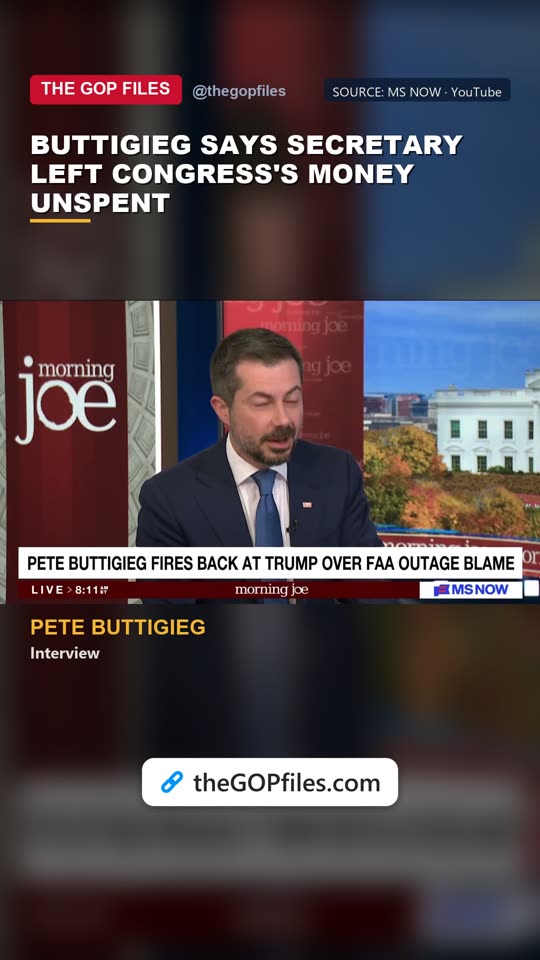 From Channel GOPButtigieg says Secretary left Congress's money unspentPete Buttigieg · 367 plays · captioned, with the source named
Wilson also said the pandemic did not change the question. He wrote that an emergency cannot create a power that has never existed 1.
The dissent
Judge James Graves Jr., an Obama appointee, wrote the main dissent. He said the majority misread the Constitution and that no House member objected that a quorum was missing. He also noted that 99 percent of lawmakers took part in the vote on the bill 1.
Put simply, historical practice over the last 235 years strongly favors rejecting the majority’s narrow interpretation,
Both sides agreed that Texas had standing to sue, which means it had a legal right to bring the case. They disagreed only on whether the proxy rule broke the Quorum Clause, according to a post on the Volokh Conspiracy, a law blog hosted by Reason 2.
A narrow case with wide questions
Texas Attorney General Ken Paxton, a Republican who lost his Senate bid earlier this month, brought the case in 2023. He wanted to stop the Pregnant Workers Fairness Act from being enforced in Texas 1.
Wilson wrote that the decision goes no further on that law than "affirming the relief awarded by the district court" 1. The full court affirmed a 2024 ruling by Judge Hendrix. A three-judge panel had earlier reversed that ruling, so the full court's decision restores it 2.
The reporting I reviewed does not say whether the government will appeal. It also does not say how the ruling might affect other parts of the 2022 bill. Those are the open questions to watch 12.
That matters because the 5th Circuit has now said Congress cannot define for itself what it means to be "present." The ruling covers a rule the House used only during the pandemic. Still, the closeness of the vote, 9-8, shows how divided judges are on the question 12.
The Record
- Texas Attorney General Ken Paxton sued in 2023 to block the Pregnant Workers Fairness Act from being enforced in Texas 1.
- A district court judge, Hendrix, ruled for Texas in 2024; a 5th Circuit panel later reversed him 2.
- The full 5th Circuit ruled 9-8 that proxy voting violated the Quorum Clause, affirming the district court 12.
Republish this story on your site or in your newsletter
Any site, blog or newsletter may run this story free of charge. Keep the credit line and its link to the original, do not sell it, and edit only for length or house style (the full terms). Photos carry their own licenses, noted under each photo on this page, so use the text alone unless a credit says otherwise.
Paste it into your editor's HTML view. The one-pixel image at the end tells our newsroom the story ran; it stores no reader data.
Sources
- The Hill, “$1.7T Biden-era government funding bill found unconstitutional, appeals court rules” (2026-11-22). thehill.com/regulation/court-battles/6235708-court-rules-con
- Reason (Volokh Conspiracy), “The Quorum Clause Case” (2026-11-22). reason.com/volokh/2026/11/22/the-quorum-clause-case
Found an error? Tell the newsroom. Corrections are noted at the top of the story.
More from the files

Paxton drops lawsuit to ban Muslim civil rights group CAIR after Texas Democratic wave
Texas Attorney General Ken Paxton's office quietly ended its suit to bar the Council on American-Islamic Relations from operating in the state. The group had called the suit an attack on the First Amendment. Gov.-elect Gina Hinojosa says she will remove the state's terrorist label from the group.

Justice Dept. joins Texas suit against Planned Parenthood days after a Democrat wins AG
The Trump Justice Department told a federal court it will step into a Texas Medicaid lawsuit against Planned Parenthood. The state is seeking more than $1.8 billion, and the suit could outlast the Republican who brought it.

Cruz says he and Talarico agreed to push together for Space Academy in Texas
Sen. Ted Cruz, a Republican, says he spent about half an hour on the phone with Democrat James Talarico, who will replace Sen. John Cornyn. They agreed to lobby together for President Trump's new Space Academy. It is an early sign of how Texas's two new senators may work together.
Delivered free to your door*
The Morning Edition
One short email at 7 a.m. Eastern: the day's top files, one clip worth your time, and the race to watch. Plain English, large type, no clutter.
*Your inbox. Free. Unsubscribe with one click, any time.