Candidates and political groups have used artificial intelligence (AI) to make or enhance at least 220 political ads this election cycle, according to the Wesleyan Media Project. The group of researchers tracks campaign advertising, and it says those ads cost just under $137 million 1. Another outlet, Gizmodo, reported the same total and said the ads ran in 34 states 2.
That is a steep climb from 2024. The project found that spending on AI ads in the presidential election was less than $50,000 12. By May of this year, the figure had already reached $20 million 1.
Most are Republican, and most are not labeled
Of the 220 ads, 81% were paid for by Republican candidates or pro-Republican groups. Another 12% came from pro-Democratic sponsors. The rest were from independents or groups on issues that were not clearly partisan 1. Gizmodo reported that Republican sponsors also accounted for 88% of the spending 2.
Only 27% of the ads said they used AI 12. Erika Franklin Fowler, a co-director of the project, said that “Much of the AI use is not disclosed through any type of disclaimer.” 2 Nearly half of the ads show deepfakes, meaning fake images or video, of real politicians 2.
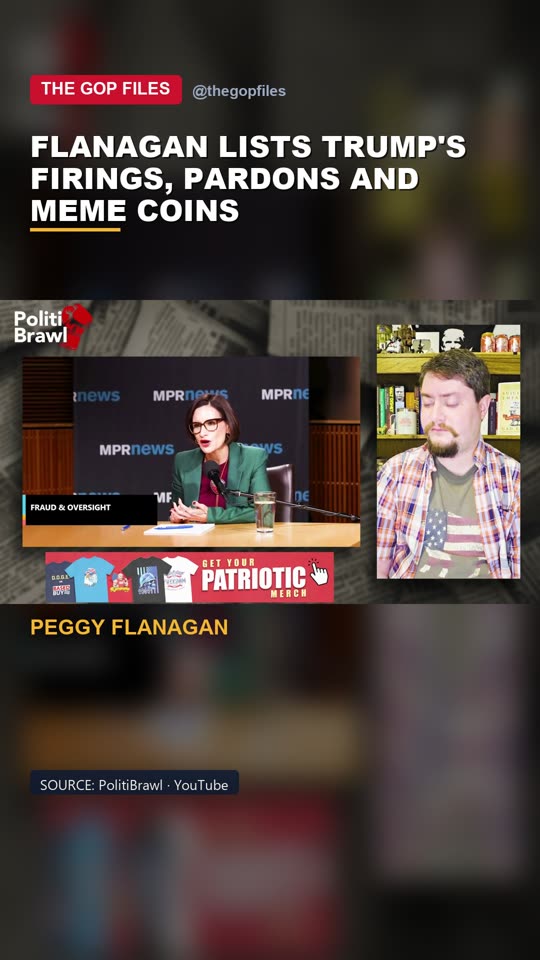 From Channel GOPFlanagan lists Trump's firings, pardons and meme coinsPeggy Flanagan · 142 plays · captioned, with the source named
Travis Ridout, a Washington State University professor and project director, said he had no explanation for the party gap. He suggested Democratic voters may be more supportive of regulation, which could hold Democratic candidates back. He added that political action committees (PACs), which are outside groups, answer less to the public 1.
What the fakes look like
In South Carolina, Lt. Gov. Pamela Evette, a Republican who lost her June primary for governor, was shown in an AI video taking a lie-detector test that catches fire. A PAC reportedly paid for it. Evette said voters asked her if it was real 1. Her own campaign then released an AI video falsely showing her opponent, Attorney General Alan Wilson, rejecting a call from President Trump, and labeled it as AI. Wilson did not immediately respond to a request for comment 1.
In Louisiana, AI videos were used in the Republican Senate primary between Rep. Julia Letlow and State Treasurer John Fleming. One showed Fleming driving a bus with a Mexican flag, falsely suggesting he moved immigrants across the border. Fleming called the ads “highly dishonest” and said they helped Letlow win 1.
Democrats have been targeted too. A deepfake in Minnesota showed Lt. Gov. Peggy Flanagan, the Democratic Senate nominee, smiling amid mountains of money. Her office said that “voters deserve to know what’s real and what’s not.” 1
Rules and what comes next
No federal law covers AI in political ads. Ridout estimates about 30 states have some rule, and at least two federal bills are pending 1. Mekela Panditharatne of the Brennan Center for Justice, a nonprofit institute, said state laws have not deterred misuse as much as hoped. She argues for a national standard 1.
I think those laws have not had as strong a deterrent effect as we would like
Ridout said Congress could reach agreement on national standards next year 1. That is after the Nov. 3 election. Until then, a missing label does not mean an image is real. The researchers also say the true count is likely higher, because AI use is hard to confirm 2.
And that could be deceptive; voters could be basing their decisions on falsehoods in that case
The Record
- Spending on identified AI ads in the presidential election was under $50,000 12.
- Spending on AI ads had reached $20 million by May 1.
- Gizmodo reported 220 AI ads and more than $137 million in spending, with only 27% carrying a disclaimer 2.
- NBC News reported 220 AI ads, with 81% backed by Republicans or pro-Republican groups 1.
Sources
- NBC News, “Deciding with fake images: More candidates are using AI in political ads to get your vote” (2026-10-23). nbcnews.com/tech/tech-news/deciding-fake-images-candidates-a
- Gizmodo, “$137 Million Has Been Spent on AI-Generated Ads Ahead of Midterms. Only 27% Included a Disclaimer” (2026-10-16). gizmodo.com/137-million-has-been-spent-on-ai-generated-ads-a
Found an error? Tell the newsroom. Corrections are noted at the top of the story.