A fracking-company founder who says there is no climate crisis and who, as energy secretary, has ordered coal plants to keep running and cancelled billions in clean-energy grants that his own department's lawyers later said were cut for political reasons.
Biography
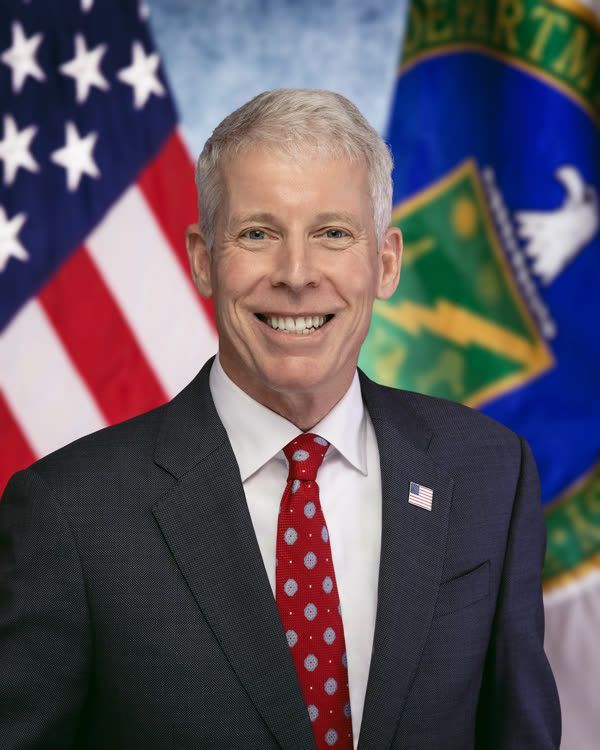
Chris Wright, born in 1965, studied mechanical engineering at the Massachusetts Institute of Technology and did graduate work in electrical engineering at MIT and the University of California, Berkeley. 110 He founded Pinnacle Technologies in 1992 and ran it until 2006; the Energy Department credits the firm with creating the business of mapping underground fractures, a key step in the shale gas boom. 1 He also chaired Stroud Energy, an early shale gas producer sold to Range Resources in 2006. 1
In 2010 he founded Liberty Energy, an oilfield services company that ABC News described as a $3 billion business fracking about a fifth of onshore wells in the country; he earned $5.6 million there in 2023. 3 He became one of the industry's most outspoken voices, saying there is no climate crisis and no energy transition, while not disputing that the climate is changing. 3 He was a frequent donor to Republican candidates and gave $228,390 to a Trump fundraising committee in 2024. 3
Trump named him on November 16, 2024, and the Senate confirmed him 59-38 on February 3, 2025, with eight members of the Democratic caucus in favor. 12 In his first budget hearing he told lawmakers the department would refocus on fossil fuels, nuclear power and the electric grid to meet demand from data centers, and said staff reductions were small and mostly voluntary. 4
In October 2025 the department cancelled a list of clean-energy grants that fell almost entirely in states Trump lost. 7 By that autumn the news site Semafor, citing Politico, reported that his relations with the White House had cooled, though it said he was unlikely to lose his job, and that he had dismissed his under secretary. 5 In 2026 he has used emergency powers to keep coal plants open past their retirement dates. 69
He remains in office: a department release of November 7, 2026, names him as secretary in renewing emergency orders for Puerto Rico's power grid. 8
In the job
The acts and events that have defined the post so far, oldest first.
Told a House spending panel the department had approved liquefied natural gas export projects totalling more than 9.5 billion cubic feet a day since January and proposed a $408 million cut to the nuclear energy office. 4
The department announced the termination of 284 grants worth more than $7.5 billion, almost all in states that voted against Trump in 2024. 7
Testified to House appropriators on a budget that would cut non-defense energy spending by more than 10 percent and end funding for wind, solar and home weatherization programs. 6
Department lawyers stated in a court filing that the grants had been terminated based solely on the political identity of the recipients' states. 7
Issued an emergency order to keep a Colorado coal plant from going offline. 9
Renewed two emergency orders for Puerto Rico's electric grid, running through February 5, 2027. 8
Disputes, and their side
What critics, courts or investigators have said, and the answer given. An allegation is not a finding.
Rep. Marcy Kaptur, the senior Democrat on the House energy spending panel, said Democrats had sent four formal letters about funding freezes and staff firings, including at the nuclear weapons agency, without a formal reply, and called the department's approach chaotic. 4
Their side: Wright said he had not answered most letters because the department was reorganizing, denied freezing funds and said no projects had been cancelled at that point. 4
Grant cancellations: the department first recommended 624 grants for termination across all states, but the final list of 284 fell almost entirely on states that voted against Trump. Maryland Gov. Wes Moore said the administration was punishing states that did not vote for the president. In July 2026 the department's own lawyers told a court the different treatment of states was based solely on political identity and had no rational link to the department's priorities. 7
Their side: Wright told House members in April 2026 that politics did not shape the evaluations and that only the timing of the announcement was political; he acknowledged some mistakes. The department did not answer the Baltimore Banner's questions after the filing. 67
Rep. Frank Mrvan, an Indiana Democrat, criticized an emergency order keeping a coal plant in his district open past its planned closing, citing an outside estimate that restarting it would cost $100 million. 6
Their side: Wright said blackouts and unreliable power would cost more, called coal capacity critical and said he would review the case if the concerns proved accurate. 6
With gasoline above $4 a gallon after U.S. strikes on Iran, Democrats asked whether Wright had warned the White House beforehand about the effect on energy prices. 6
Their side: Wright said he had discussed the energy consequences with the president and defended current prices given the disruption to oil markets. 6
Career
Engineer in the hydraulic fracturing industry after MIT
Founder and chief executive of Pinnacle Technologies, a fracture-mapping company
Chairman of Stroud Energy, a shale gas producer sold to Range Resources
Founder, chairman and chief executive of Liberty Energy, an oilfield services company
Board member of the nuclear power company Oklo
Secretary of Energy
In their own words
Quotes from our stories, each matched word for word against its source before it ran.
“doing everything in our power to mitigate the possibility of power outages”
Florida's Republican governor-elect told NBC that more oil moves through the Strait of Hormuz now than before the Iran war. PolitiFact rated the claim Mostly False. Several ship trackers show that oil traffic through the strait is still below prewar levels, even though gas prices are now falling.
The Energy Department's order keeping Michigan's 64-year-old J.H. Campbell coal plant running expires Nov. 14, two months after a federal appeals court said the first order was unlawful. Two more plant orders run out next week, and customers are being asked to pay the bill.
Four Senate Democrats want billions in canceled clean energy grants restored before a vote on a bipartisan permitting bill. The demand tests whether the Senate can still make deals a week before the midterms.
Heating oil now costs more than $6 a gallon, up from about $3.50 a year ago, and the Iran war gets much of the blame. A week before Election Day, the price is hurting Republicans in three close Senate races, and the administration's emergency oil loan covers less than one day of winter use.