Congress Watch · Report · File No. 261117-877
Cruz announces deal on airline safety bill requiring planes to broadcast location
Sen. Ted Cruz says House and Senate negotiators have an agreement in principle on a bill to put collision-warning technology on aircraft in crowded airspace. A few details remain, and he wants it passed before the year ends.
Every quote in this story (2) was matched word for word against its source. How we work
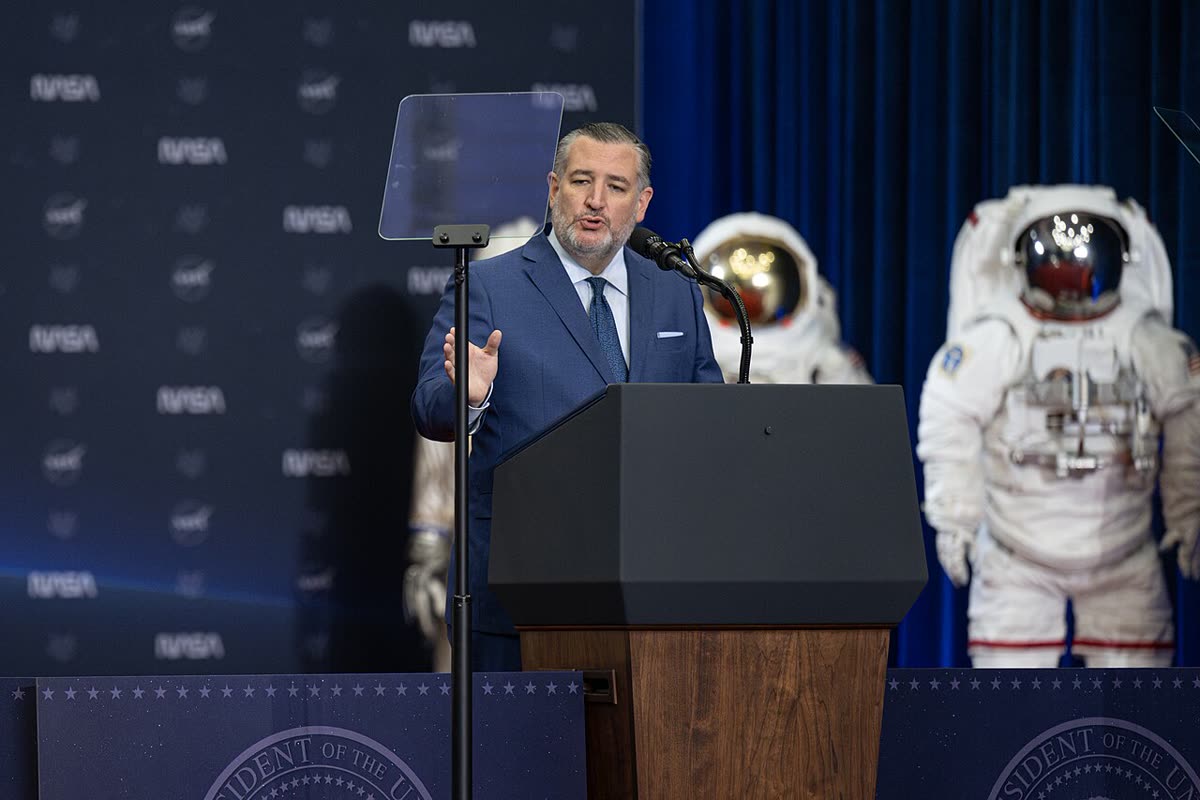
Sen. Ted Cruz, a Republican from Texas, announced Tuesday that the House and Senate have reached an agreement in principle on a stalled airline safety bill. It would require planes in crowded airspace to carry technology that lets them see nearby aircraft and transmit their own location 1.
Cruz spoke at a press conference in front of the Capitol. He was joined by families of victims of the January 2025 crash at Ronald Reagan National Airport, who have pushed for the technology since the collision 1.
What the technology does
The equipment is called ADS-B In. It shows nearby air traffic with visual and audible alerts 1. The National Transportation Safety Board, the federal agency that investigates crashes, has recommended it as a required safety feature since 2008. The Federal Aviation Administration (FAA) has not adopted it 1.
In the January 2025 crash, an American Airlines passenger jet collided with an Army Black Hawk helicopter on approach to the airport. The collision killed 67 people 1. Supporters of the technology say it could have alerted the airline pilots to the helicopter 1.
 From Channel GOPTalarico lists the powers Trump took from CongressJames Talarico · 234 plays · captioned, with the source named
How the bill got stuck
In December 2025, the Senate unanimously passed the ROTOR Act. It would have required ADS-B In for all commercial and military flights in busy airspace 1. The bill then failed in the House by one vote, after the Pentagon withdrew its support because of the requirements it would put on military aircraft 1.
The House then passed its own bill, the ALERT Act. It would require military flight crews to broadcast their location during non-sensitive missions, closing what the coverage calls the “military loophole” 1.
Cruz and Democratic Sen. Maria Cantwell of Washington opposed that bill. They argued it lacks the critical improvements the aviation system needs 1. In a March 2026 joint statement, the two senators said the ALERT Act “falls short on a strong and clear requirement” for the technology 2.
We still have a couple of details to negotiate with the House Armed Services Committee, but with this agreement in principle, I believe we're going to get this bill done,
What happens next
Cruz said some details are still to be negotiated with the House Armed Services Committee 1. The Pentagon's objections to military requirements were what sank the earlier Senate bill, so that is the part to watch 1.
Cruz said his goal is to finish the bill this year, with this Congress, before lawmakers leave for the new year 1. The coverage did not report a vote date, and it did not report the final text or any deadline for planes to install the equipment 1.
We must have strong military accountability in the national airspace. The military must be a willing partner with the Department of Transportation and the FAA to make sure that what happened that January never, ever happens again,
The pattern is worth noting. The Senate passed a version unanimously, and one House vote and Pentagon resistance stopped it 1. Nearly two years after the crash, families are still waiting for a requirement that federal investigators first recommended in 2008 1. An agreement in principle is not a law, and the bill still needs to pass both chambers and go to the president.
The Record
- An American Airlines jet collided with an Army Black Hawk helicopter near Reagan National Airport, killing 67 people 1.
- The Senate unanimously passed the ROTOR Act, which failed in the House by one vote after the Pentagon withdrew its support 1.
- Cruz announced an agreement in principle between the House and Senate on ADS-B In legislation 1.
Republish this story on your site or in your newsletter
Any site, blog or newsletter may run this story free of charge. Keep the credit line and its link to the original, do not sell it, and edit only for length or house style (the full terms). Photos carry their own licenses, noted under each photo on this page, so use the text alone unless a credit says otherwise.
Paste it into your editor's HTML view. The one-pixel image at the end tells our newsroom the story ran; it stores no reader data.
Sources
- CBS News, “Cruz announces deal on stalled airline safety bill” (2026-11-17). cbsnews.com/news/airline-safety-bill-deal-ted-cruz/
- Senate Commerce Committee, “Cruz, Cantwell Joint Statement on ALERT Act Markups” (2026-03-26). commerce.senate.gov/press/rep/release/cruz-cantwell-joint-st
Found an error? Tell the newsroom. Corrections are noted at the top of the story.
More from the files

Senate unanimously passes $2.9 billion NOAA weather bill as agency staffing cuts linger
The bipartisan bill would modernize storm forecasting and protect some warning jobs from hiring freezes. It does not directly restore positions cut in 2025, and the House has yet to act.
Climate groups warn GOP may rush bill shielding big oil from lawsuits before January
Republicans could try to pass a bill by year's end that would end climate lawsuits against oil companies, advocates warn. The bill stalled in September, but they say a lame-duck push is possible.

Cruz now says tariffs made 'everything too expensive.' He voted five times to keep them
After Republicans lost Congress, Sen. Ted Cruz blamed tariffs for high prices. In 2025 he voted against every Senate attempt to repeal them, and he had warned in April 2025 that tariffs could cost his party dearly.
Delivered free to your door*
The Morning Edition
One short email at 7 a.m. Eastern: the day's top files, one clip worth your time, and the race to watch. Plain English, large type, no clutter.
*Your inbox. Free. Unsubscribe with one click, any time.