Climate & Disasters · Report · File No. 261113-755
Senate unanimously passes $2.9 billion NOAA weather bill as agency staffing cuts linger
The bipartisan bill would modernize storm forecasting and protect some warning jobs from hiring freezes. It does not directly restore positions cut in 2025, and the House has yet to act.
Every quote in this story (2) was matched word for word against its source. How we work

The Senate passed a bipartisan weather bill unanimously on Nov. 10. It would strengthen the nation's forecasting and warning systems at the National Oceanic and Atmospheric Administration (NOAA), the agency that runs the National Weather Service 1. The Congressional Budget Office estimates it would cost about $2.9 billion from 2027 through 2031, if Congress provides the money 1.
The bill is the Weather Research and Forecasting Innovation Reauthorization Act of 2026. It is led by Democratic Sen. Maria Cantwell of Washington and Republican Sen. Ted Cruz of Texas 1. It now goes to the House 1.
What the bill does
The bill would require NOAA to assess its staffing needs and write a five-year workforce plan. It would also protect certain forecasting and warning positions from hiring freezes 1. It would strengthen weather radar and research on floods, wildfires, drought, extreme heat, hurricanes and tornadoes 1.
The bill does not mention the Department of Government Efficiency (DOGE), the Trump administration's cost-cutting push. It also does not directly restore jobs eliminated under that push 1.
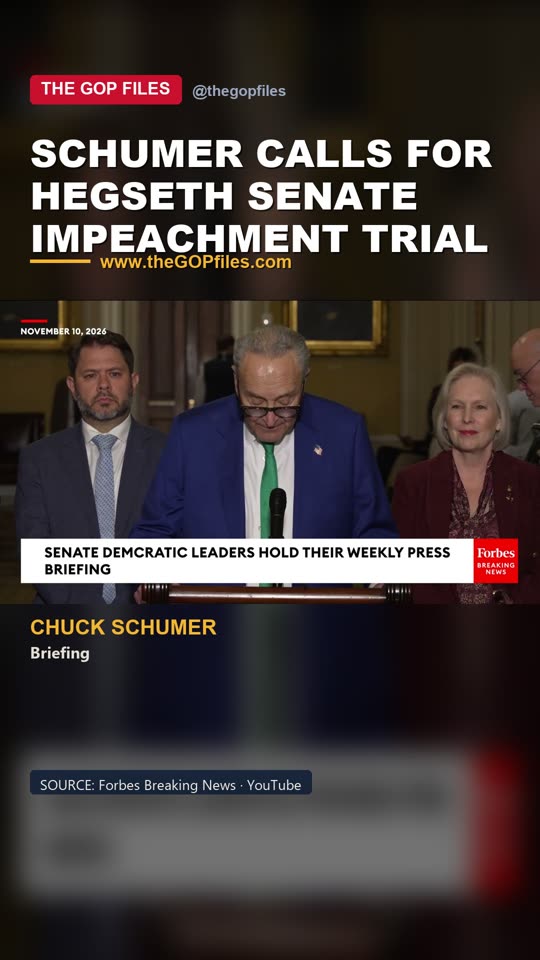 From Channel GOPSchumer calls for Hegseth Senate impeachment trialChuck Schumer · 431 plays · captioned, with the source named
Americans are facing increasingly dangerous and costly weather disasters, and better forecasts give communities more time to prepare and get out of harm’s way,
The cuts behind it
NOAA's cuts began in February 2025, when about 880 employees were fired, most of them probationary. In March, the administration moved to eliminate more than 1,000 additional positions 1. The Congressional Research Service says NOAA has lost about 20% of its workforce since early 2025. It says the National Weather Service alone shed more than 550 staff 2.
Some weather offices cut weather-balloon launches from twice a day to once. Others suspended them for lack of staff. The balloons gather data used in forecast models 1. In May 2025, 30 weather service offices had no lead meteorologist, and at least one office stopped operating around the clock 2.
The July 2025 Texas Hill Country floods drew scrutiny to those gaps. The weather service issued timely warnings, and the cuts have not been shown to have caused or worsened the disaster. But a vacant warning coordination meteorologist post, the person who works with local emergency officials, raised questions about coordination 1.

The Weather Act brings together over a dozen bipartisan bills to modernize radar systems, deliver more accurate and timely forecasts, and improve warnings so families and first responders have more time to act, no matter where they are and no matter the time of day.
What happens next
If the House approves the bill and President Trump signs it, it would reauthorize federal weather research and forecasting programs through fiscal year 2031 1. A House companion bill, H.R. 5089, cleared the House Science Committee last September but has not reached the floor 2. The two chambers would have to reconcile their versions 2.
A 2023 reauthorization proposal passed the House by a wide bipartisan margin but stalled in the Senate 1. The original 2017 law was signed by Trump 1.
That matters because the bill authorizes spending but does not provide it. Congress must still appropriate the money. Appropriators rejected the administration's proposed fiscal 2026 cuts to NOAA's research laboratories. But Science magazine reported the administration kept ending weather instrument contracts 2.
The push comes as NOAA expects a strong-to-very strong El Niño this winter. It favors a stormier southern tier and wetter-than-average conditions across California and much of the Southwest 1.
The Record
- About 880 NOAA employees, most of them probationary, were fired in February 2025; the administration moved in March to eliminate more than 1,000 more positions 1.
- The Senate Commerce Committee unanimously advanced the Weather Act 2.
- The full Senate passed the bill unanimously; it now goes to the House 1.
Republish this story on your site or in your newsletter
Any site, blog or newsletter may run this story free of charge. Keep the credit line and its link to the original, do not sell it, and edit only for length or house style (the full terms). Photos carry their own licenses, noted under each photo on this page, so use the text alone unless a credit says otherwise.
Paste it into your editor's HTML view. The one-pixel image at the end tells our newsroom the story ran; it stores no reader data.
Sources
- Newsweek, “Senate Moves to Strengthen NOAA Forecasting With $2.9 Billion Proposal” (2026-11-13). newsweek.com/senate-moves-to-strengthen-noaa-forecasting-wit
- Insurance Business, “Insurers rally behind weather research bill amid deep NOAA cuts” (2026-03-06). insurancebusinessmag.com/us/news/catastrophe/insurers-rally-
Found an error? Tell the newsroom. Corrections are noted at the top of the story.
More from the files
FEMA chief tells states to build reserves and expect less federal disaster help
FEMA's administrator told state emergency managers on Oct. 20 to prepare to handle most disasters without federal help, and said changes could start within six months. Older residents in flood- and storm-prone areas could face slower aid and higher local costs.

Sanders pushes Medicare at 55 with 51 Senate votes as Democrats split on how far to go
Sen. Bernie Sanders wants the new Democratic Congress to lower the Medicare age from 65 to 55 and add dental, vision and hearing coverage. He would use a budget process that needs only a simple majority. Moderates and party leaders want a slower path, and President Trump has promised vetoes.
Records show Medicare warned AI contractors of backlogs and denials within weeks of launch
Letters made public in a lawsuit show Medicare officials pressed four private companies over delays and denials in a pilot that could pay them from savings. The Dec. 11 spending deadline may be Congress's next chance to act.
Delivered free to your door*
The Morning Edition
One short email at 7 a.m. Eastern: the day's top files, one clip worth your time, and the race to watch. Plain English, large type, no clutter.
*Your inbox. Free. Unsubscribe with one click, any time.