Health Care · Report · File No. 261122-552
Scientists fight to restore halted Alzheimer's research on Black Americans
The Trump administration abruptly stopped NIH-funded studies on why Black Americans are twice as likely as white Americans to develop Alzheimer's. Researchers say the cut wasted millions of dollars and damaged community trust.
Every quote in this story (2) was matched word for word against its source. How we work
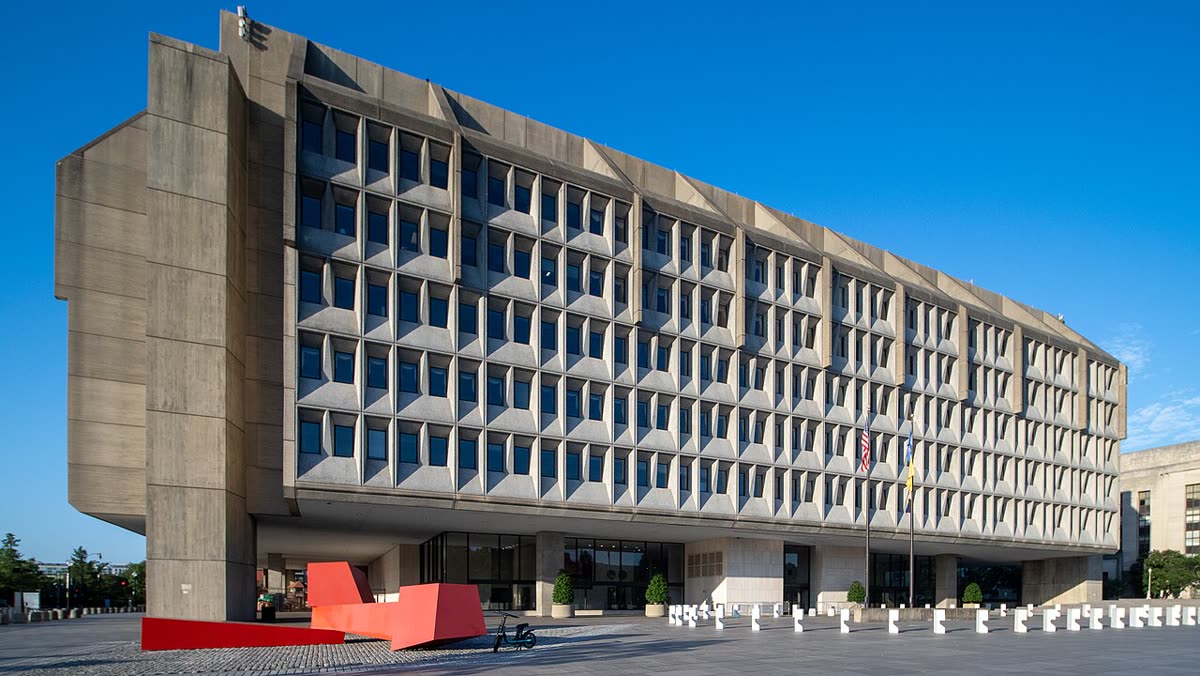
Scientists whose Alzheimer's research on Black Americans lost federal funding are fighting to get it back. Black Americans are twice as likely as their white peers to develop the disease, PBS NewsHour reports 1. The Trump administration halted one study in Pittsburgh in its final stretch 1.
In the Hill and Homewood neighborhoods, participants took memory tests and tracked their sleep and blood pressure. They also shared stories of their pasts 1. Researchers say the halt wasted more than $8 million in taxpayer money already spent 1. Participants may never learn whether their brain tests showed signs of trouble 1.
A breach of trust
Roderick Blair, 70, took part for four years. He said his neighbors will feel the researchers left them hanging. "It's going to take years to reestablish something that was moving pretty good," he said 1.
Trust in U.S. health institutions has long been strained in the Black community. The Tuskegee study, which withheld treatment from Black men infected with syphilis in the 1930s, still casts a shadow 1.
 From Channel GOPMeyers on Trump's UN threat to annihilate IranSeth Meyers · 295 plays · captioned, with the source named
La'Vette Wagner, the Pittsburgh study's field coordinator, said the work got families talking about memory loss. Some who once blamed memory loss on depression began asking about dementia 1. The Alzheimer's Association says 55% of Black Americans believe major memory loss is a natural part of aging rather than disease 1.
You lose trust a hell of a lot faster than you build it,
Researchers say the National Institutes of Health (NIH), the federal medical research agency, ended the study on the grounds that it was unscientific. They say a community advisory board had reviewed and vetted it 1. Wagner said the work was genuine 1.
Other studies hit, and a lawsuit
Negar Fani, a neuropsychologist at Emory University in Atlanta, was two years into a five-year, $2.9 million study of how racial discrimination affects Black Americans' brains and bodies. NIH ended it in July. She is looking for about $2.3 million to finish it 1.
Andrea Rosso, who led the Pittsburgh study, is among scientists in a recently filed lawsuit against NIH and the Department of Health and Human Services (HHS) 1. Ann Cohen, who directs Pittsburgh's Alzheimer's Disease Research Center, is also a plaintiff. Her separate study stopped after $5.2 million over three years 1. Cohen has called the loss of data "a tremendous waste of time and intellectual resources" 2.
An HHS spokesperson said "Massive amounts of DEI grants have failed to translate into better health outcomes for minority populations." DEI stands for diversity, equity and inclusion. The spokesperson said NIH is shifting money into "rigorous research" that will help all Americans 1.
Why it matters
NIH has awarded 2,000 fewer multiyear grants this year than in 2025, worth a total of $200 million, according to the Association of American Medical Colleges 1. Jill Rosenthal of the Center for American Progress said many decisions rest on "political biases" rather than peer review 1.
The Pittsburgh study was 15 years in the making. It would have helped identify participants at higher risk for Alzheimer's, and for doctor visits and care. Wagner said the findings are now "stuck on a shelf" 1.
What happens next depends on the lawsuit and on whether the money is restored. The researchers say they must also decide what to do with participants' blood samples 1.
The Record
- The ACLU reported that Pittsburgh's Ann Cohen lost an Alzheimer's grant three years into her study, and that a class action challenging NIH terminations had been filed 2.
- PBS NewsHour reported that researchers are fighting to restore halted studies and that NIH has awarded 2,000 fewer multiyear grants this year than in 2025 1.
Republish this story on your site or in your newsletter
Any site, blog or newsletter may run this story free of charge. Keep the credit line and its link to the original, do not sell it, and edit only for length or house style (the full terms). Photos carry their own licenses, noted under each photo on this page, so use the text alone unless a credit says otherwise.
Paste it into your editor's HTML view. The one-pixel image at the end tells our newsroom the story ran; it stores no reader data.
Sources
- PBS NewsHour, “Scientists are fighting for their halted funds. Trust of Black communities may be harder to win back” (2026-11-22). pbs.org/newshour/health/scientists-are-fighting-for-their-ha
- ACLU, “NIH censors crucial research in Alzheimer's, kidney disease and more, researchers share” (2026-09-28). aclu.org/news/free-speech/nih-censors-crucial-research-in-al
Found an error? Tell the newsroom. Corrections are noted at the top of the story.
More from the files
HIV researcher forced to drop cash payments from NIH-approved study, Guardian reports
NIH is reviewing grants it says are not in 'alignment' with the Trump administration's priorities and asking scientists to rewrite studies already approved. Medical research that older Americans rely on is being reshaped by politics.
Attorney General Blanche's wife, on NIH panel, sold supplements with unproven claims
The Guardian reports that Kristine Blanche, wife of Attorney General Todd Blanche and a member of a federal alternative-medicine advisory council, marketed products tied to Epstein-Barr and HPV. A watchdog says the panel role raises conflict-of-interest questions.
Researchers ask judge to block NIH screen that flags more than 200 'disfavored' terms
Scientists told a San Francisco federal judge that the National Institutes of Health screens grant applications for words like 'gender' and 'climate change.' The judge signaled that some grant cancellations may be unconstitutional, and he plans to rule by the end of the year.
Delivered free to your door*
The Morning Edition
One short email at 7 a.m. Eastern: the day's top files, one clip worth your time, and the race to watch. Plain English, large type, no clutter.
*Your inbox. Free. Unsubscribe with one click, any time.