A new AARP survey finds that the cost of caring for adult relatives could influence voters in close House races. In 43 competitive congressional districts, most likely voters age 50 and older said they are more likely to back candidates who support unpaid caregivers 1. AARP is a nonprofit, nonpartisan group that advocates for people 50 and older 1.
Among those older voters, 77% said they would be more likely to vote for a candidate who advocated a tax credit for unpaid family caregivers who help pay for a loved one's care. Another 75% said they would be more likely to back a candidate who supported helping caregivers keep loved ones in their homes 1.
Who was surveyed
Fabrizio Ward and Impact Research conducted the poll for AARP from Oct. 1-5. They interviewed 1,368 likely voters age 18 and older, including 848 voters 50 and older. The margin of error for the full sample is plus or minus 2.7 percentage points 1.
Matt Hogan, a partner at Impact Research, said voters 50 and older are the deciders in the election. He said a focus on helping caregivers would help candidates win over that bloc 1.
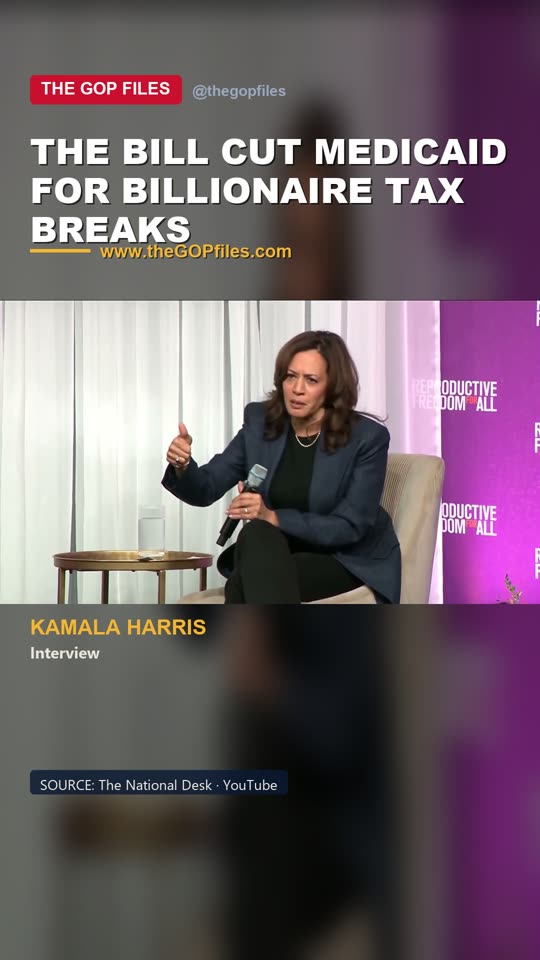 From Channel GOPThe bill cut Medicaid for billionaire tax breaksKamala Harris · 131 plays · captioned, with the source named
are going to be the deciders in the election
The cost to families
About 59 million Americans care for an adult family member, neighbor or friend, according to a recent AARP report 1. A new Edward Jones study found that Americans caring for aging relatives spend an average of $8,737 a year out of pocket 1.
Brittney Saunders Graves of Temple, Texas, is the main caregiver for her 62-year-old mother, who had a stroke in 2020. Graves, a 33-year-old Army veteran, said she spends about $600 a month on transportation, copays and medications 1.
The strain reaches into retirement. The Employee Benefit Research Institute's 2026 Retirement Confidence Survey found 34% of caregivers have less than $10,000 in savings and investments, compared with 25% of non-caregivers. It also found 69% of caregivers say debt is a problem, compared with 57% of non-caregivers 1.
Medicaid cuts loom
Some Medicaid cuts in President Donald Trump's "big beautiful bill" take effect in January, CNBC reported. Keesha Middlemass, a Howard University political science professor, said that without government help, unpaid caregivers would face greater financial challenges 1.
The future cuts, actually, that are going to come to Medicaid and Medicare in 2027 are going to be devastating for those in the lower incomes, but also workers that are in the care economy,
Paula Bussard, a 71-year-old retiree in Carlisle, Pennsylvania, worries the cuts will mean fewer doctors, home health agencies and equipment providers will accept Medicaid, the government health program for lower-income people. Her family already spends $5,000 to $7,000 a year caring for her 42-year-old son at home 1.
Why it matters
That matters because the midterms are a week away, on Nov. 3, and Democrats need a net gain of four House seats to take control 2. Only about 40 to 50 House races are truly competitive, Reuters has estimated 2. In seats that tight, a bloc as large as older voters can decide the outcome.
The survey measures support for ideas, not for either party. Some families say campaign proposals do not necessarily give them confidence that real help is coming 1.
The Record
- AARP's poll of likely voters in 43 competitive House districts began; interviews ran through Oct. 5 1.
- CNBC reported the AARP results alongside an Edward Jones finding that caregivers spend an average of $8,737 a year out of pocket 1.
- Midterm Election Day; Democrats need a net gain of four House seats to win control 2.
Sources
- CNBC, “Caregiving for adult relatives can cost thousands. AARP survey finds support could matter to midterm voters” (2026-10-26). cnbc.com/2026/10/26/family-caregiving-costs-2026-midterm-ele
- The Guardian, “What are the US midterm elections and why do they matter?” (2026-10-26). theguardian.com/us-news/2026/oct/26/what-are-midterm-electio
Found an error? Tell the newsroom. Corrections are noted at the top of the story.