Social Security & Medicare · Report · File No. 261101-819
Records show Medicare warned AI firms over delays and denials in pilot GOP kept alive
Newly released records show federal officials sent warning letters to companies running Medicare's AI review pilot in four states. The program reaches traditional Medicare patients in six states and survived a party-line Senate vote in July.
Every quote in this story (2) was matched word for word against its source. How we work

Federal records released Oct. 27 show that Medicare officials sent warning letters to private companies running a pilot program that uses artificial intelligence (AI) to review care requests. The letters went to companies in four states and raised long delays, high denial rates and customer service problems 1.
In July, Senate Republicans voted to keep the program running. The tally was 46-50, and it split along party lines 7. These latest records came out more than three months after that vote.
What the program does
The pilot is called WISeR, short for Wasteful and Inappropriate Service Reduction 9. It is run by the Centers for Medicare & Medicaid Services (CMS), the federal agency led by Dr. Mehmet Oz 6. It operates in Arizona, New Jersey, Ohio, Oklahoma, Texas and Washington, and is scheduled to run from Jan. 1, 2026, through Dec. 31, 2031 4.
WISeR adds prior authorization to some services in traditional Medicare 6. Prior authorization means a request is reviewed before the care happens 4.
 From Channel GOPHusted's nine votes against lower health premiumsSherrod Brown · 129 plays · captioned, with the source named
Services in the pilot include skin and tissue substitutes, electrical nerve stimulator implants, and knee arthroscopy for osteoarthritis 4.
What the records show
The Electronic Frontier Foundation (EFF), which sued the government for the records in March, published more than 800 new pages. They include requests for information or corrective action plans that CMS sent to four of the six companies 2.
A March 17 letter to Virtix Health, which handles Washington state, cited "determination turnaround times that exceed established guidelines" and "denials that appear inaccurate or inconsistent with applicable criteria" 12. Documents show Virtix rejected more than half (53%) of the 6,096 Medicare claims it processed in the first three months of 2026 1.
A Feb. 27 request to another company, Zyter, cited reports that decision letters were not going out on time 2. Innovaccer, which handles Ohio, received a notice of non-compliance dated Feb. 20 for failing to deliver a fully working provider portal 23. The company had urged the government to delay the Ohio rollout because its software was not ready 1.
An earlier batch of records, released in September, cited a request that went unanswered for 83 days. CMS says companies should respond within 72 hours. Two companies denied 5,944 requests in the first three months 3. EFF noted in a correction that reported wait times cover the full request process and are not solely controlled by the companies 3.
Those records also included anonymous comments from medical providers. One wrote, "We have patients calling our offices crying in pain." Another said "patients are having to be cancelled for surgeries they need" 3.
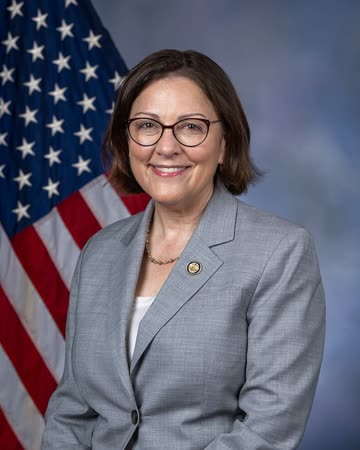
It is past time for Congress to put an end to this dangerous AI experiment.
What the company and CMS say
Virtix blamed high dismissal rates on "provider misunderstanding" and said faxes sent to the wrong agency caused delays of up to 10 days. It also said its average prior authorization turnaround is now 1.18 days 1. The company said almost two-thirds of requests are now approved, and that the final approval rate rises to 84.3% after resubmissions 1.
CMS confirmed that Virtix cut its turnaround times and that its corrective action plan has been closed 1. In June, a CMS spokesperson said the agency audits WISeR companies to prevent inappropriate denials 6. The agency argues the pilot curbs low-value, costly care 6.
CMS also says recommendations of non-payment are decided by licensed clinicians 7. Its public guidance says such reviews "cannot be performed solely by technology" 2. EFF argues that human review means little unless reviewers have enough time and real authority to overrule the AI 2.
Follow the money
Companies are paid 25% of the cost of averted procedures, documents reviewed by KUOW, Seattle's public radio station, show. That pay can be cut by up to 10% for slow or inaccurate decisions 1. Neither Virtix nor CMS would say how much the companies earn from these contracts 1.
EFF says companies are not paid for denials that are reversed on appeal 3. It also reports that the government itself described the payment structure as giving companies "an incentive to deny as many claims as possible" 2. That matters because the check on that incentive looks small: the 5% to 10% cut for low quality scores, in EFF's reading of the records, is modest next to the reward 3.
The vote, and who cast it
Democrats forced the July 16 Senate vote to end the pilot 7.

The last thing seniors need is even more AI denying the care they need.
Democrats answered that seniors were paying the price for the experiment. Sen. Ron Wyden of Oregon put it this way 7.
Senators from two pilot states, Ohio's Bernie Moreno and Texas's John Cornyn and Ted Cruz, voted with the Republican majority 7. Husted is the Republican incumbent in Ohio's closely watched Senate race this year against former Sen. Sherrod Brown, a Democrat 8. Brown was not in the Senate for the vote. Our searches found no campaign statement on the pilot from either man.
The fight is not over. A House committee voted unanimously in June to add language to the 2027 health spending bill that would block funds for WISeR 6. That means some Republicans have also been willing to challenge the pilot, even though the Senate's Republicans held the line in July.
Why it could grow
A June 2025 planning document lists possible future targets for this kind of review: air ambulance transport, cancer treatment, MRI scans and some medications. It discusses cases where approval would have to come on a more urgent basis 3. A planning document is not a decision, and no expansion to those services has been announced in the records we reviewed.
The pattern is worth watching. Federal officials were raising problems privately within weeks of launch, while the public learned of the letters only after a lawsuit 2. In June, 31 House Democrats asked Oz for data on wait times, denials and appeals, and when audits would be released 6. Voters in the six pilot states may want to ask their candidates the same questions before Tuesday.
The Record
- The WISeR pilot begins in six states, with a scheduled end date of Dec. 31, 2031 4.
- CMS issues Innovaccer a notice of non-compliance over its provider portal 2.
- CMS sends Virtix Health a letter citing slow decisions and denials that appear inaccurate 12.
- The Senate votes 46-50 along party lines, defeating Democrats' effort to end the pilot 7.
- EFF publishes more than 800 new pages of records, including CMS requests to four of the six companies 2.
Republish this story on your site or in your newsletter
Any site, blog or newsletter may run this story free of charge. Keep the credit line and its link to the original, do not sell it, and edit only for length or house style (the full terms). Photos carry their own licenses, noted under each photo on this page, so use the text alone unless a credit says otherwise.
Paste it into your editor's HTML view. The one-pixel image at the end tells our newsroom the story ran; it stores no reader data.
Sources
- KUOW, “Records show confusion, finger-pointing during AI Medicare rollout” (2026-10-27). kuow.org/health-care/2026-10-27/records-show-confusion-finge
- Electronic Frontier Foundation, “New Records Obtained by EFF Expose More Problems with Medicare's AI Experiment” (2026-10-27). eff.org/deeplinks/2026/10/new-records-obtained-eff-expose-mo
- Electronic Frontier Foundation, “New Records Reveal Problems with Medicare's AI Prior Authorization Experiment” (2026-09-08). eff.org/deeplinks/2026/09/new-records-reveal-problems-medica
- CMS, “Wasteful and Inappropriate Service Reduction (WISeR) Model” (2026-11-01). cms.gov/priorities/innovation/innovation-models/wiser
- Healthcare Dive, “Senate Republicans block effort to repeal Medicare AI prior authorization pilot” (2026-07-17). healthcaredive.com/news/senate-republicans-block-medicare-ai
- Healthcare Dive, “Democrats push for more data on Medicare AI prior authorization pilot” (2026-06-24). healthcaredive.com/news/democrat-letter-more-data-wiser-medi
- Newsweek, “Medicare update: List of senators voting against repeal of major AI change” (2026-07-16). newsweek.com/medicare-update-list-of-senators-voting-against
- Ohio Capital Journal via Yahoo, “Huge bipartisan majorities of Ohioans want a fix to Social Security, new poll shows” (2026-10-30). yahoo.com/news/politics/articles/huge-bipartisan-majorities-
- TechTimes, “Medicare AI Prior Auth: CMS Penalized Four Vendors in Secret as Delays Harmed Seniors” (2026-10-28). techtimes.com/articles/329576/20261028/medicare-ai-prior-aut
Found an error? Tell the newsroom. Corrections are noted at the top of the story.
More from the files

Ohio cancer patient, 83, pulled $4,000 from savings as health costs weigh on older voters
An Associated Press report shows how medical bills, Medicare changes and caregiving costs are squeezing retirees days before the midterms. Medicare's yearly cap on drug costs rises $300 in January, and federal subsidies that held down drug plan premiums are ending.
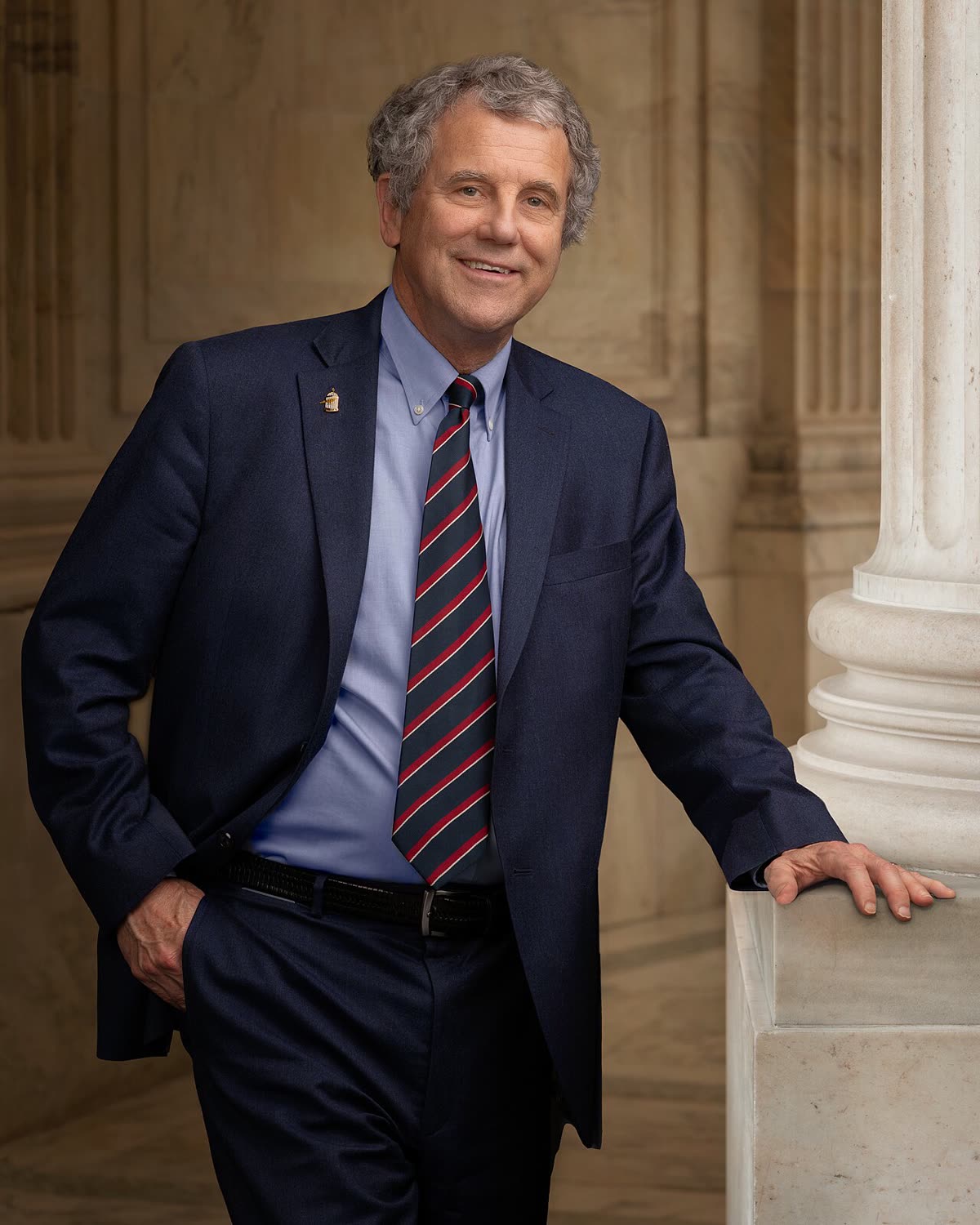
Brown and Husted offer Ohio seniors opposite Social Security plans before Tuesday
Ohio's Senate race, a toss-up that could help decide control of the chamber, has become a contest over Social Security and Medicare. Democrat Sherrod Brown backs raising the payroll tax cap, while Republican Sen. Jon Husted offers no specific fix.

Oz's Medicare rule on home monitoring expected within days, over bipartisan objections
Medicare proposes to stop paying for at-home blood pressure and blood sugar monitoring when outside contractors do the work. Lawmakers in both parties warn that rural seniors could lose access, and a final decision is expected around Election Day.
Delivered free to your door*
The Morning Edition
One short email at 7 a.m. Eastern: the day's top files, one clip worth your time, and the race to watch. Plain English, large type, no clutter.
*Your inbox. Free. Unsubscribe with one click, any time.